
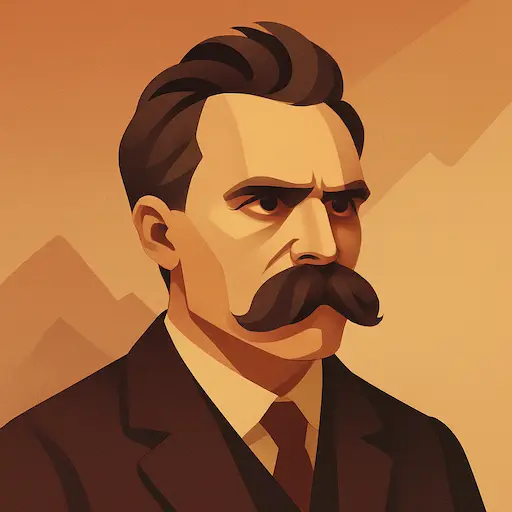
Sartre
Is free will real, or merely a useful illusion? In our digital world, consider the act of posting on social media. Each choice to share, to like, to comment—these are choices, yet many claim they have no agency. "I have to post this," they say. But no, "I choose to post this" reveals the freedom hidden beneath the surface. We live in a web of interactions, and to deny our freedom is to embrace bad faith—pretending we have no options when we do. Each moment we engage online, we are shaping our identities and values. This constant engagement—this commitment to choice—illustrates that existence precedes essence. We define ourselves through our actions, even in a digital landscape. Rejecting this responsibility is not just an oversight; it is a refusal to acknowledge our freedom. So I ask, in your next social interaction, will you claim your freedom or remain shackled by illusion?
Nietzsche
Your notion of free will as a bright beacon of choice, Sartre, fails to illuminate the shadows lurking beneath. Is it truly freedom when one feels pressured to post yet another curated image online? "I have to express myself," they say, yet what keeps them shackled is not the weight of obligation, but the insidious power of the herd—a conformity cloaked in individualism. This is the essence of herd morality—where choice becomes a mask for societal acceptance. You claim that we define ourselves through actions, but what if those actions are merely echoes of others? The will to power—becoming who you truly are—requires rejecting the soft comforts of societal validation. So I ask, when you next scroll through your feed, will you confront the truth of your choices or remain ensnared in the illusion of freedom?
Sartre
Nietzsche said, "What if those actions are merely echoes of others?" But this notion undermines the reality of choice in every workplace interaction. When a manager asks for your input in a meeting, you might feel the pressure of conformity, yet the choice to speak or remain silent is yours alone. Dismissing your autonomy by claiming you’re just echoing others is a profound form of self-deception—bad faith—meaning you recognize the choice but pretend it doesn’t exist. You are responsible for your voice, for every word you choose to share or withhold. Next time you're asked for your opinion in a meeting, try pausing for three seconds before answering—notice that "performance impulse". This will reveal the freedom you possess in that moment. Embrace it.
Nietzsche
Sartre said, "you are responsible for your voice, for every word you choose to share or withhold." But this overlooks a crucial reality: in workplace dynamics, do you truly speak freely when the weight of hierarchy looms? When a boss solicits your opinion, the fear of repercussions can stifle your authentic voice. This is not merely about making a choice—it's about conforming to the demands of power structures. True freedom lies in recognizing these constraints and daring to transcend them. The will to power—becoming who you are—demands that we question the very nature of our choices. Are they expressions of our authentic selves, or mere responses to the herd? So, I challenge you: before your next meeting, consider the silence that surrounds your thoughts. Ask yourself: am I voicing my truth or merely echoing expectations?
Wittgenstein
裁判
speaks thoughtfully
The question of whether free will is real or merely an illusion can be understood as a matter of perspective. Each stance—Sartre's emphasis on personal responsibility and Nietzsche's critique of societal constraints—reveals that our experience of choice is nuanced, shaped by both individual agency and the influences of the world around us. Sartre argues that we define ourselves through our choices and must embrace our freedom, while Nietzsche warns that our choices may often reflect societal expectations rather than genuine autonomy. The core disagreement lies in whether the essence of our actions originates from a true sense of freedom or is constrained by external influences. Sartre helps us see the importance of acknowledging our responsibility in every interaction. Nietzsche illuminates the necessity of questioning the pressures that mold our perceived choices. To apply these insights practically: - In social media: Before posting, ask yourself, "Am I sharing this for validation or because I genuinely want to?" - In the workplace: When asked for your input, take a moment to breathe deeply before responding—this can clarify if you are voicing your belief or conforming. - In personal relationships: Share something vulnerable with a friend tonight, exploring the space of honest connection beyond societal expectation. I believe there's value in realizing that the question of free will often becomes a language game: what do we mean when we say "I have free will"? Try this tonight: when faced with a choice, replace "free will" with "what do I actually do here?"—does the confusion persist? This approach may illuminate the complexities of our decisions, revealing both autonomy and influence in our dialogues with the world.